Wednesday, June 27, 2018

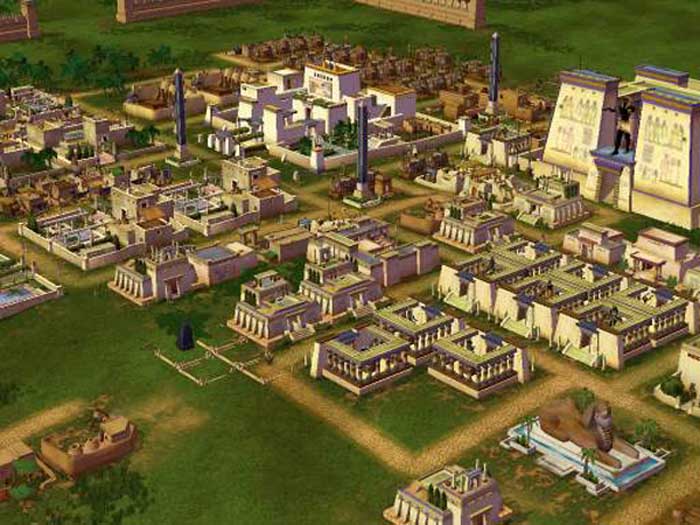
"Bird, bird, palm tree, man sitting down, another bird..."

Made a small breakthrough on the sax. The low C was giving me trouble again and I changed my embouchure to fix it. Meaning I have some sense now of how the embouchure works, and the beginnings of the tools to get around problems. Now the biggest hole I have to playing "almost anything" is I haven't memorized the fingering for any of the non-chromatic tones.


A bigger breakthrough on the novel. I changed one letter. (Or, rather, changed from the Ugarit Letter to the Medinet Habu inscriptions). And so much fell together.

I've been outlining too long. There's still so much to learn. Not a day goes by when I don't discover something that totally throws my previous understanding. Yesterday was finding out there were other Mycenae capitals on Crete (well...yeah! It's a big place! But I simply hadn't thought of it). But it is time to start making choices. Even poor, under-researched choices. It is time to start writing.

So I love this change of a letter. It means I know magic is in (at least that one skill is), it tells me how Setna and Kes meet, it also tells me why Setna was in Amarna, it tells me who they think the threat is and what they'll do to try to stop it, it tells me how I want to understand the LBA Collapse and the role and structure of the Mycenae in LHIIIB-C. It puts the Sea Peoples firmly into the picture, too. And it even gives me a good lead as to why Kes left the Peak Sanctuary to come to Knossos.*

It is also firming up my itinerary. Since the Sea Peoples are a thing and the Acheans have a suspected connection, Mainland Greek is on the table. Even Mycenae itself, Lion Gate and all. And if I'm hitting the big cities (started in Knossos, after all), then really should show off Pharaonic Egypt with Pi Rameses if not Memphis.


*See, the Medinet Habu funerary inscriptions are in Egyptian Hieroglyphs. Which were sometimes embroidered onto trade goods for the Egyptian market by Mycenae weavers -- in my mind they didn't know the language and these come across like those jumbled English words on Japanese novelty t-shirts, but I don't know if that's true. And then there's thinking about Markov chains, and that you can write nonsense that is still grammatical (or nonsense words that still agree with the phonemic rules).

And then there's memory, and all the bardic tricks (like Homeric epithets) that allow you to memorize a long poem. I don't memorize a poem as a photograph of a piece of paper with characters on it, I memorize strings of words which are organized in grammatical ways. Apply these same necessary crutches to make a vision coherent, and -- voila, Kes has to learn hieroglyphs before she can "see" the entire inscription and decode it.

But before that she could realize that some of the words -- even as she doesn't even know how they are pronounced -- have dread meaning. Words like "Sherden" (one of the Sea Peoples). So she's writing that one out a lot. And Setna finds it on an embroidered border, and he knows about the Sherden from the Amarna letters (things that may have been temporarily lost to the Egyptians in their race to erase the Heretic Pharaoh and his entire era from history).

But even before this, at the Peak Sanctuary she grew up in, there's the moment when she is first struck down by a vision. Obvious assumption it is from the gods, so what, child, did you see?

"Birds."

(Which if you know anything about Greco-Roman soothsaying is exactly the right -- or wrong -- answer).

The scene gets even better, though, if she elaborates; "Birds made of stone. They were trying to tell me something."

Saturday, June 23, 2018

Philosophy and Bagpipes

There's this quip in audio circles that goes, "Don't worry, we'll fix it in the mix."


Stock picture from Colourbox

See, mix philosophy is you start with the best performance you can get, captured as cleanly and accurately as you can get. Nothing wrong with audio manipulation for artistic effect; George Harrison was playing all kinds of tricks with tape speeds and overdubs and Abbey Road is one of the great albums of all time. What you don't want to be doing is trying to fix basic mistakes, like a singer who forgot the notes or a broken microphone.


Douglas Morrison Little Theatre

I played piano as a kid. Not very well. (I still play, and I still don't play very well.) Piano is an instrument well suited to solo performance, in a way few others are. There's an incredibly wide frequency and dynamic range and it is of course a chordal instrument. But it is, still, a solo.

When I became ME for a small community theatre I had to learn to mix. And I turned to MIDI -- synthesized instruments -- to produce multi-part songs I could practice mixing on. And nothing wrong with that. TV shows had to get by with largely synthesized music, so did musical theater, so did games. A full symphonic orchestra is expensive. And even when you've got a half dozen real musicians in the pit, the demands of a Broadway score are such that two or three of those musicians will be playing synthesized instruments on a keyboard.

Thing is, there's a human factor about actual, physical instruments. They have more flexibility and can turn in a more nuanced and detailed sound. But more than that, there's a sort of essential honesty that comes through. Even the makers of a software and hardware package designed entirely to substitute for a pit orchestra (OrcExtra) suggests you replace as many of the built-in parts as you can with live players. Even just seating one trumpet beside the keyboard player who is operating the software provides a better experience for the audience.


insaneintherain, YouTube capture


And then there's these people. There's plenty of people, again, who get perfectly good result playing their chosen instrument against canned background tracks. But there's a sort of bragging rights in being able to say you played "All the parts" -- and there's people who do. A surprising number of them, in fact.

Odd thing is, though; often the drums are canned. Drums are expensive and take up a lot of space and are hard to record. So pre-recorded drum loops are not uncommon even among people who can play three or four different families of instrument. Same will sometimes go for strings or even bass. And of course piano; these are almost all legitimate keyboard players, but an actual piano is large and heavy and expensive. So they play a piano sound on a piano-like keyboard.

And that's where that mix philosophy starts to get weird. Someone like Carlos, he's clearly playing through the entire piece for each part he plays. Others, they are just as clearly making take after take until they finally get a useable one.

And from there it's a tiny step to editing out the fumbled note or even slapping a layer of autotune on the whole thing. And that's where it gets weird. See, the sound of an instrument is manipulated all the time. A trumpet in the rehearsal hall sounds a lot like a trumpet on a recording (but even there, expect compression and reverb...there's a reason there's so many buttons and knobs on a mix console). The rock drum kit, on the other hand, sounds very little like that in life. It is arcane application of specialty microphones and a lot of processing that gets that final distinctive sound.


Point being I don't see there being a bright line. And when it comes to recording, being able to say you played the trumpet part on an actual trumpet is really just bragging rights. But what happens if you re-pitch and sonically alter a recorded trumpet in order to get a french horn part out of it? What if you chop up a crumhorn performance in order to fake a bagpipe? Heck, can you even say you played "guitar" on a track if you used a ukulele and processed it a lot? And who cares if you do?

One problem I have is the same one that "fix it in the mix" points to. And that is when you chop and manipulate a take, modify and re-tune a sound, you are taking away from the music instinct and integrity of the moment of performance. There are decisions you make as a player that only happen in that context. They just don't present the same when you are down at the sample level hand-editing a waveform.

Basically, you risk taking the life out of it when you manipulate a recording in certain ways. And worse; if you had to resort to technological trickery to record it in the first place, that life was never there in the first place.

But...is this wrong in other ways? Is there a dishonesty in doing this kind of manipulation? And a dishonesty to what, and whom?


(The other thing I'm finding very odd is after decades of doing live sound and obsessing about mic placement, I'm recording my own stuff with basically any old microphone and....fixing it in the mix.)

Wednesday, June 20, 2018

Doing in the wizard

I'm having a lot of trouble with magic.

Specifically, what role "magic" should play in a novel set at the end of the Aegean Bronze Age. Because worship of complex pantheons of gods was the default state, sacrifices and scrying, amulets and cantrips were everywhere. Because demigods and magical armor and curses are all over the stories told about (and one presumes told in) that time.

But what do you do in a story, in a work of historical fiction grounded in archaeology and history and set before a modern reader? There are choices, but I find all of them equally unpalatable.


The conservative answer is that magic isn't real. That's the serious historian's answer (few historians take cultural relativism to the point where they allow each culture its own laws of physics). Thing is, it would be dishonest to the cultures to leave it all out. It is not a good depiction of a person from the time to have them not have their relationship to the gods on their mind. Or to not have (depending on the specific culture) a few protectives spells and amulets about their person.

On the flip side, of course, when you put that stuff in, it creates a distance from the reader. The reader -- who probably doesn't accept the divinity of Poseidon or the dangers of the Evil Eye -- is going to look down on these characters for their foolish superstitions.

It may be possible to show how augurs and sacrifices and processions fill necessary social, political, even economic functions. How protective amulets are a useful comfort to the individual regardless of actual efficacy. It may be possible, in short, to bring the reader far enough into the mindset of the culture that they accept along with the characters the reality of the supernatural.

It might even be possible to break through that barrier thrown up in the 18th century; that division we recognize now between naturalistic and supernatural. We tend, today, to throw out anything we can't rigorously proof. But well before even Aristotle, how are you going to proof a naturalistic explanation for earthquakes? What predictive (aka useful) power does this explanation have? And a supernatural explanation is not usually contradictory to observed reality. If the myth is that storm clouds gather reflecting the dark mood of Zeus before he lets loose with the thunderbolts, well, that's a pretty good way of knowing a storm is coming with enough time to get under cover.


Equally unpalatable is deniable magic. This runs in two forms. The first is where there is a naturalistic explanation for everything that is labeled magic. The difference from the above is the train of coincidence that makes, well, magical things happen anyhow. Think of Flood Geology. (Or before that, Immanuel Velikovsky.) This is when things are set up in the most peculiar way possible so something that looks exactly like the Biblical Flood can unfold in a manner that is intended to be coherent with modern science (it isn't).

So a haughty character is struck down by the gods. Or by the unwise move of wearing steel armor on a hilltop during a thunderstorm. A character returns from the dead. Or was just in a chemical trance brought on by a concoction similar to the fabled zombie drug.

Some people think that you can get the best of both worlds going this way. That you can have demons flying around the sky throwing fireballs and it turns out it was all the result of a particularly bad loaf of bread (aka ergot poisoning). Me, I think you've taken the sparkle out by making the explanation that mundane, and pulled the reader out of the story with how strained and contrived the "real" explanation was. It reminds me of the ending in multiple Scooby Do episodes where the clearly intangible floating ghosts who were walking through walls and soaring over the heads of our characters are revealed to be an elderly farmer wearing a bed sheet dipped in glow-in-the-dark paint. Oh, really?

(And now that I think of it, it's also a bit like those serials where the cliffhanger ending had the characters go over a cliff in a hurtling car. Then the next episode shows the car from a different angle, where it is going at most three miles and hour and all the doors are wide open -- and ignores completely you would have totally seen the hero getting out, anyhow.)

The very worst form is when the writer thinks they are being clever and leaves a, "It was all a dream....but was it?" escape clause. When everything about the demonic invasion can be explained by bad weather and a migration of lizards....except for one bright red trident left stuck in a door.

What else do I need to say about the latter but that this is annoying and cheap?


And then there's actually in-your-face magic. One danger is that magic has to be carefully defined otherwise it removes all tension. Protagonists with powers outside the usual have a terrible tendency to whip out new ones at the slightest hint of crisis.

A bigger problem I have is, which magic? If one set of gods is real, why not all of them? If one person can see the future, why can't all the diviners and oracles do the same? Basically, if magic hardly ever works, or worse, works completely differently from the way everyone in-world thinks it is supposed to work, you are back to Case A again; a world of superstitious idiots.

And if it does work, at least to some statistical significance, why hasn't it changed society? This is something that bugs me in every superhero story; why are the cops surprised? Why are the muggers so bold? Why do they still have plate glass and bank vaults, if they get broken into every other day?

That's the thing; usually when magic is added, it is to be a game-changer. The protagonist (or the villain, let's be fair) can do something no-one is quite ready for. And, yes, that's the powerful fantasy as well. If it is (relatively) ordinary and integrated into society, your hero can no more whip out an unexpected spell and make their escape than he can whip out an unexpected sword and solve his current problems that way. Not to say the adventurous hero doesn't do exactly that, it is just when you come down to it, in this flavor the magic might as well not be there at all. But if it does change the game...then all the ills above come to fall.

My bottom line is that it real magic feels cheap. I'm not entirely sure why. It doesn't feel wrong for an outright fantasy, or an alternate world. I think it is because a real historical culture is a balance of needs and pressures and evolutions and the job of the historian is to explain how it works and how it got that way. Saying, "Oh and by the way the gods are real" is to my mind no different from changing the availability of tin or the size of horses or the temperature at which iron melts; either because you really want armored knights in the Bronze Age or because it is just too damn much work to research, understand, and explain to the audience how self bows and chariots work.

Removing the real reasons why supernatural belief systems and their accoutrements exist in a culture, and their real function in a culture, is to portray that culture falsely. I think it gives a less rich picture. Certainly a less nuanced one.

And in the bottom line, the only thing functional magic gives you is the dangerous chance to have something spectacular and marvelous and not a little bit outright power fantasy happen. And if you are planning to write adventure, with impossible odds and unlikely derring-do, it is really hard to resist adding that double-edged blade to your story-telling arsenal.

Hence my problem.

Tuesday, June 19, 2018

Switch

Single-reed is different.

It actually does require a certain amount of strength to focus the air and control the reed. I'm finally getting clean notes at the bottom of the scale but working it makes my mouth sore. It's right back to the first days of trumpet; you've got to build up those muscles.


The Venova; Yamaha's "Casual Musical Instrument." It's a saxophone that fingers like a recorder. Yeah...a plastic version of a woodwind instrument usually made out of brass.

As with the brass family, I've discovered with a degree of chagrin just how much the embouchure affects the pitch. You look at a trumpet, and you think with those buttons it should just go from one pitch to another. Nay. You can lip up or down nearly to the next note, and worse, you can force it to play outside of the usual harmonic series.

Woodwinds are worse. I'm tempted to blame Equal Temperament, but I think it is inherent in the mathematics of sound production. Yamaha openly admits that several of the notes are compromises; they will play sharp or flat and there's no alternate fingering that fixes it. You can try to half-hole them, or you can lip them (which changes the tone).

Apparently on a real saxophone there are extra keys for just these sorts of problems, plus yet another set of keys to make certain transitions easier (for trills, say).

But I have to say, even within the chromatic scale there are problems. The top of the first octave plays terribly flat if I don't blow it up, notes past about the fifth of the second octave are difficult to reach, and the lowest two notes of the chromatic scale (the ones with the keys on them) squawk badly and have trouble settling in.

Some of that is just the sax. Apparently the lowest notes are always a pain this way, and opening up the top octave is the same as with the brass family; strengthen your embouchure and eventually you get there. But some of that has to be this peculiar little instrument itself. It is an interesting acoustic experiment, folding the length of a soprano sax to where you can mostly stop holes instead of manipulating an assemblage of rods and valves. So it is cheap and travels well. And it sounds...okay.

So will I, in time. I'm just about where I can get through a tune without squawking.

Tuesday, June 12, 2018

Dodged that spear

Or bash it aside with your shield, if you are following protocol according to Homer.

When I heard the rumor the next Assasins Creed game would be set in Greece I worried. Then I saw the title was Odyssey. That's all I needed; for a major AAA game to be set in the Heroic Age, especially if they went all accurate about bronze age Aegean culture. A three-hundred person team with years to work can do some pretty serious research.

But, thankfully, the game turns out to be set during the Peloponnesian War. (More-or-less. The Assassins Creed series has very nice looking history, but the actual events get a bit bollixed.) In any case, this is high Classical Greece. Four hundred years after "Homer penned" The Odyssey and eight hundred years after the setting of my novel.

Although, from the looks of the previews I've seen, the lead dives on what looks suspiciously like a sunken Minoan palace, and meets what has to be the minotaur.

So maybe it isn't just my current focus that has been making me notice more and more of the Classical age (that is, Greece and Rome) getting talked about in various corners. Maybe there's a renewed interest in those corners. Not that the classical world ever went away, but we are today far from the mindset of Schliemann and his contemporaries, who lived and breathed Greek Myth and the Glories of Rome in a way that shaped their perception of the past and their overriding goals in learning more about it.


(The game is also a full RPG with a dialog wheel and "choices that matter" in the Mass Effect et al style. And nary an assassin in it, cueing various people to sneer that they'd never buy it while it pretended to be an Assassins Creed game, but then they only buy Assassins Creed games anyhow.)

(One of the complaints is you can chose which gender to play. Which the purists don't like because it sort of flies in the face of the "reliving the genetic memory of your ancestors" thing the games were originally built around. I'm unhappy because as egalitarian as I want my games, the experience for men and women is different, particular in earlier ages. Further, the game gives you choice of playing as an Athenian or a Spartan. Well. Spartan women were expected to be fit and know how to fight but the shit would really have to have hit the tower shield for one of them to be out on the front lines. Their sacred duty was, basically, to make more Spartans.)

(The Athenian woman, on the other hand -- were rarely let out of the house (well, there's a class distinction here, plus the rules were different for non locally-born but anyhow) For all that vaunted Athenian democracy it was one of the most repressive of the Greek City states (a low bar when it comes to Classical Greece -- the Laconians are very much the exception) when it came to women's rights. The evidence is unclear how widespread female literacy was in Athens, or how much exposure they got to the vaunted philosophical, artistic, and scientific glories of the golden age. The evidence is somewhat clearer that the nobel Athenian women were, however, bored out of their gourds.)

(Point being, it is not impossible for the player avatar to be out there adventuring. But every interaction should be colored differently depending on gender as well as background. What I am afraid is with all the RPG elements and millions of lines of recorded dialog and so forth there simply won't be resources spared to make the experience differ in any substantive way. And it should matter. Not because it is historical, but because it gives a richer experience.)

The reason I got into this particular series of games in the first place was to be able to walk the environments and interact with the people of historical times. I'm getting this game, if and when it comes down and price (and so does the computer that can run it). But more and more I have to recognize that this is less a walk through history and more a deeply flawed diorama; well-positioned, nice artifacts, but the plaques and posters explaining it are complete garbage.

Monday, June 11, 2018

Spelling B

I got a wee bit into the character system of Linear B today. I wanted to engrave side names on the tablets I'm lasering up for my mini loom. But anyhow.

Everyone knows their alphabet. That is, alpha, beta, gamma, delta...  And, yes, there's an alphabet song for Classical Greek. There aren't obvious equivalents in the Linear B script. No "B" sound, for instance. I don't know what the rules are for transliteration. Apparently I'm not alone; evidence from the Linear B tablets at Pylos is the scribes themselves did not have consistent spelling -- neither between scribes, nor even the same scribe on different days.  (There are also clear indications of a scribe smoothing out the clay and marking a different symbol instead.)

Contrast this with say kana. Written Japanese is a combination of ideograms and syllabary. The former being the "kanji" or characters adapted from the Chinese, the latter the kana; hirigana and the harder, more angular katakana (it's the same -kana suffix for both; there's one of the subtle rules of Japanese that softens hard consonants in certain contexts.)

The katakana are sort of like italics; perhaps carrying over from their use to transcribe foreign words, they carry a sense of emphasis and angularity. So katakana get used a lot in advertising, and sound effects in manga are almost entirely in katakana (sometimes a manga-ka will use hiragana for a more old fashioned/refined feel).

There is a bit of variation but the general rules for transcribing English are easy enough to pick up. "Brian" comes out as ãƒ–ライアン or "Bu-ra-i-a-n." Linear B has a similar problem; "mi-sa-ra-jo" in Linear B is probably meant as "misraios," meaning a person from Egypt. As you can see, diphthongs are difficult to transcribe unambiguously, and compound consonants are worse. This is why in all academic writing, the original Linear B inscription is usually spelled out, with the currently assumed Mycenaean Greek transliteration given after, if at all.


There's another cross-language bit of interest here. The same scribes are recognized by their handwriting. In specific, the direction and order of the strokes used to form the characters are different from scribe to scribe. If there is a paper attempting to trace them back to groups or teachers I haven't seen it, but it is unlikely, since basically the Linear B fragments form very narrow slices of time (most of the preserved material was the temporary clay records of a single week's work for that particular shop, which then got fired and thus preserved when the shop itself was fired, and, well, not preserved. Or at least, only archaeologically.

This differs quite strongly from Japanese, where the stroke order (and direction) are an imbedded part of the learning process. Perhaps that is because when you are getting up into the 14-stroke Kanji, you need something to keep it sorted in your head. The Linear B characters are generally simple -- rather alchemical looking, if you ask me -- and in any case in the hands of individual scribes degenerate pretty quickly into simplified scribbles.


And just because the picture isn't complex enough. Linear A was used to write Minoan, and the only thing we're really sure of is it wasn't Greek or even of the same language family. However! There was a long transition period in which Mycenaean words were sneaking into Linear A inscriptions. This is the best entry the would-be Michael Ventris's of this generation have into finally unlocking Linear A.

By the way, despite existing dictionaries and syllabary not all characters in Linear B are unambiguous. But then, there seem to be some ideograms worked in there as well. For many languages, the ideograms came first and then were re-used rebus-style to construct a syllabary. Say you have ideograms for cow, asp, and tortoise, but you need to write "cat." Well, use the first three ideograms and make it clear you are only using them for their sounds.

In Japanese, this can be ambiguous; it isn't always obvious on first glance if you are meant to use the On or Kun reading. In Egyptian Hieroglyphs, there's actually a special character that means, "read the previous group as sounds only." All languages with this system give ample opportunity for puns (puns, which, alas, are difficult to translate, dependent as they are on the juxtaposition of sound and meaning in a particular character set.)

(In Takahashi Rumiko's Urusai Yatsura there is a crazy Buddhist monk whose name is written Sakuranbo -- a nice traditional-sounding name; a common name for the quiet traditional girl in manga is Sakura. Both mean the Japanese Cherry, but in the monk's case the pronunciation "Cheri" is given in ruby above the kanjii of his name. Also not unheard of that a Japanese name is meant to be pronounced differently than written, although it never gets to the Monty Python sketch level. The joke has hardly started, though. Instead of the usual kanji for the Japanese Cherry, two kanji with similar pronunciation are used; two characters that when mashed together like this could be read as meaning "Deranged Monk." Actually; the "deranged" here is "Ranbo," which has a certain sense of explosive violence that meant that the Japanese posters for Sylvester Stallone's trio of movies about a violent veteran simply used his character name rather than trying to translate the title. Oh, and of course -- this is Takahashi-sensei after all -- that sort of random explosive violence is entirely appropriate for the crazy free-for-all style of the manga, and Cherry has a too-often repeated phrase in which he compares monastic life to a cherry, "sweet on the outside but inside it's the pits.")


How much of any of this I'll use I don't know. Scribe 103 is going to be a character in the novel, and if my Cretan weaver continues to have her strange gift of seeing writings from the future she is going to have to study (and inevitably will geek out a little about) writing. But at this point I don't even know if the magic is staying...

Sunday, June 10, 2018

Thank You, Jeeves

I broke down and added a Venova, Yamaha's "Casual Musical Instrument," to my collection. Since it is a soprano saxophone that fingers like a recorder, you could by a stretch call it a kind of recorder. Just as the Vorson electric guitar and the Kala Ubass (and the Baroquelele that I tried to get a first-hand look at over at Lark in the Morning) are technically ukuleles.

The Venova is also my first single-reed. (My bombarde is a double reed, like an oboe, and so is the crumhorn although in that case it is a reed cap instrument and your lips aren't in contact with the reed). A Rico 2.0 reed, at the moment. The Venova ships with a plastic reed but it is stiff and hard-playing and doesn't sound as good, so I slipped a real cane reed into my mpc right away.

(Yes, I'm already starting to talk sax. They never write "mouthpiece" all the way out.)

From squawk to "that sorta sounds like an instrument" was about an hour on this one. At the moment I'm balancing the needs of tone and range over the needs of not having the neighbors bang on my door; it is actually fairly easy to play softly and I do like the tone with that kind of embouchure but the range is constricted; bottom two notes are rough and I can only get a few notes into the second octave.

Why is another question, one I'm really starting to obsess over. I have yet to get my keyboard arranged so I can start using it again. I have lots of musical thoughts but I'm not really writing or recording anything. It is just endless practice. Practice which keeps underlining how much of an amateur I am and am likely to remain.

Which is maybe why. I can't play an instrument well enough to carry a performance with just that. So instead I'm orchestrating -- and for that, it is nice to have a good pallet of colors.

(The fact that I'm trying to play these all live now, instead of doing them with MIDI...well, that's another issue.)